 Masuk
MasukWinter in Sokcho Spoiler Analysis: From Loneliness to Losing Herself | Can She Find Her True Self?
 159
159


- Introduction
- Main Characters and Relationships
- Hotel Employee
- Yan·Klande
- Relationship Network
- The Summary of Winter in Sokcho | Minor Spoilers
- Introduction to Elisa Shua Dusapin
- Hot Chapters of Winter in Sokcho
- Chapter 1 of Winter in Sokcho
- Chapter 2 of Winter in Sokcho
- Reading experience
- If you liked this, try these
- When Love Cuts Deep, Loneliness Bleeds
- You Will Never Be Mine
- Mr. president, I do
Introduction
“I am not lonely, I am simply waiting to be seen.”
Winter in Sokcho is a work of contemporary literary fiction. The story is set in Sokcho, a city in northern South Korea near the sealed border with North Korea. It follows a young woman and the emotional connection that develops between her and a foreign man. The man stays at the guesthouse where she works. This debut novel by Elisa Shua Dusapin explores encounters between strangers, self-discovery through travel. And also shows the gradual bond between two people from very different worlds. The novel also examines the complexities of identity and desire. If you are looking for a story about unspoken longing and subtle cross-cultural tension, Winter in Sokcho is an excellent choice.
Main Characters and Relationships
Hotel Employee
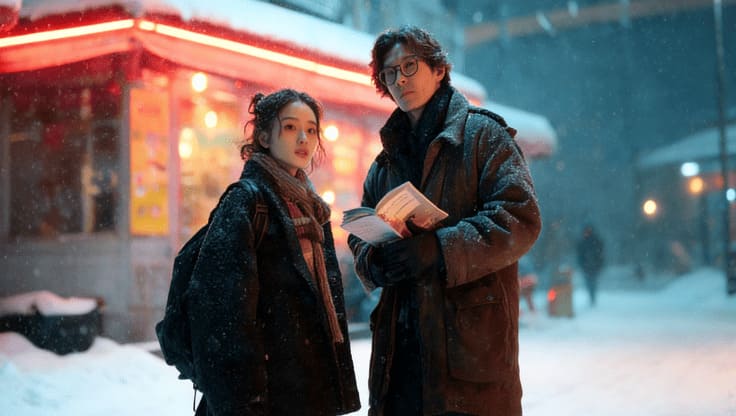
The female protagonist works at an old guesthouse in Sokcho. Her life seems calm and orderly, but inside she carries loneliness and longing. She knows every street of the city and the noise of the fish market. And she also bears responsibility for her mother and family. When the French graphic novelist arrives, she feels both curious and cautious. His presence disrupts the rhythm of her daily life. And pulls her between the familiar world she knows. She accompanies him to snow-covered mountains, waterfalls, and even near the border with North Korea. She then realizes that her true self is not only what others see, but something shaped by her inner experiences and choices.
Yan·Klande
He comes to Sokcho in search of artistic inspiration. He shows little interest in the city’s daily life and is drawn instead to extreme and dramatic landscapes. His gaze is shaped by idealism and the distance of an observer, which makes him hard to approach. His presence inspires the young woman working at the guesthouse. And deepens her sense of loneliness and alienation. The Korea he portrays is a foreign, imagined landscape, not the reality she knows so well. This contrast pushes her to rethink her sense of self, identity, and emotion. And it fills their relationship with subtle tension and uncertainty.
Relationship Network
Hotel employee (the female protagonist / of French–Korean heritage) — the center of the story; the narrative is driven mainly by her inner monologue
Yan Klande (male protagonist / outsider) — an external catalyst who introduces an “outsider’s perspective” and artistic inspiration
Guesthouse Guests / Town Residents — supporting characters who reflect the everyday life and atmosphere of Sokcho
The Protagonist’s Mother — appears only briefly, but embodies the protagonist’s family background and sense of responsibility

The Summary of Winter in Sokcho | Minor Spoilers
In the winter of Sokcho, the relationship between the young woman and the French graphic novelist unfolds through their shared journey. But it never becomes fully defined. As the journey continues, she gains a clearer understanding of her identity, loneliness, and desire. While the artist’s world remains an outsider’s fantasy. They are drawn to each other, but they cannot truly come together. In the end, the graphic novelist leaves and the city returns to its quiet routine. She stays and continues her life at the guesthouse, yet something inside her has quietly changed. Her understanding of herself and of life deepens. And she learns to find her own voice and sense of presence within solitude. I already want to read it all over again! Winter in Sokcho (all chapters)—if you’re interested, go give it a read!
Introduction to Elisa Shua Dusapin
Elisa Shua Dusapin is a French–Korean writer whose work is known for its refined, restrained prose. And there are sensitive portrayals of loneliness, identity, and subtle emotional relationships. In Winter in Sokcho, she uses the cool, wintry setting of a northern town and spare, precise language to render the characters’ inner worlds. She excels at using the surrounding environment to mirror psychological states, allowing readers to feel the interweaving of solitude and longing.
Hot Chapters of Winter in Sokcho
Chapter 1 of Winter in Sokcho
Winter in Sokcho begins with the the young woman’s daily life at a guesthouse in Sokcho. The cold winter leaves the city empty and quiet. While she takes care of the guests, she feels a deep sense of loneliness and distance inside. A French graphic novelist suddenly arrives. His outsider’s perspective stands in sharp contrast to her ordinary routine. He shows little interest in the city’s daily life but is fascinated by landscapes and extreme experiences. The young woman feels both curious and confused. This chapter sets up the tension in their relationship. It shaped by attraction and distance, and hints at the emotional developments to come.
Chapter 2 of Winter in Sokcho
Chapter Two of depicts the young woman accompanies the graphic novelist as he explores the sights around Sokcho, including snow-covered mountains and waterfalls. She notices that he shows no interest in the familiar details of her daily life, focusing on finding the “idealized image of Korea.” Watching him, she feels both distant and drawn to his enthusiasm. Her desires and confusion begin to surface: she wants to be understood, yet feels cut off by the fantasy world he creates. This chapter deepens the subtle tension between them and hints at her self-discovery and future conflicts.
Reading experience
I want to visit South Korea very much. So I was immediately drawn to this novel the first time. Elisa Shua Dusapin’s letter lets me feel the biting winter of Sokcho like the heroine’s inner loneliness. The contrast between her routine at the guesthouse and the arrival of the French graphic novelist reminded me of my own experiences. Especially when I try to find a sense of belonging in unfamiliar surroundings. The line, “I am not lonely, I am simply waiting to be seen,” moved me deeply. It prompts reflection on the subtle relationship between loneliness and being understood. People come and go, passing through our lives. This is especially poignant while traveling, evoking memories of those fleeting, dreamlike connections. We don’t want those brief, beautiful encounters to end. This story reminds us that everyone has special people in lives with whom they shared brief moments. But will never meet again. And we can’t help but wonder if they, too. It remember us with the same tenderness, reverence, and lingering longing.
If you liked this, try these
When Love Cuts Deep, Loneliness Bleeds
When Love Cuts Deep, Loneliness Bleeds tells the story of a high-society world in Silverbay. It's a critically ill heir unexpectedly announces that he will randomly choose the daughter of a prominent city family as his wife. And hoping that the marriage will bring him luck and prolong his life. The Simmons family is thrown into immense pressure—they have only three days to present their daughter. On the eve of the wedding, the heroine is forced to go in place of her sister Roxanne to face the heir. Her mind a tangle of fear, helplessness, and family duty, with every emotion stretched taut. Confronted by Clinton Whitfield’s threats and cold promises, she vacillates between obedience and resistance. The novel creates a tense and heartbreaking narrative through themes of power manipulation. It shows a perilous marriage arrangement, and the heroine’s gradual emotional awakening. Ultimately, her choice not only affects her family’s fate but also exposes the delicate balance between power, love, and sacrifice.
You Will Never Be Mine
You Will Never Be Mine tells the story of Shannon Gray’s devoted and persistent love for Sean Ford. Only to be repeatedly ignored and hurt in the process. She gives her heart entirely, yet realizes she has always been merely a passing presence in his life. Sean pushes her to the edge of a cliff for another woman. Shannon experiences a full awakening: he was never truly hers. In that moment, she felt anger and disappointment. The novel tells unrequited love, betrayal, and self-realization. From blind devotion to personal awakening, leaving emotional twists and the possibility of future revenge or independence. It highlights the harsh realities of love and the cost of growth.
Mr. president, I do
Mr. President, I Do tells the story of a former crown princess abandoned by fate. She is kidnapped, rejected, and ultimately forced into a marriage of convenience. The heroine loses her mother at a young age and is labeled a “bastard child”. She grew up under the oppressive control of her father and stepmother, Kally. Her life is filled with fear and loneliness. When she is compelled to marry a man of mysterious identity, she expects to plunge once again into despair. However, Rean Windsor, a royal heir concealing his true identity becomes the first person in her life to protect her unconditionally. The novel revolves around themes of arranged marriage. It delivers constant emotional reversals: from fear to being cherished, from being trampled to being safeguarded. It also plants the seeds for a major revelation about her true lineage and royal conspiracies.

 HIS REGRET (Ex-Husband wants Me Back) Spoiler Alert! From Cold CEO to Full-On Groveling|How Does the Ex-Husband Win Her Back?The Don’s Favorite Lover Vanished: From Hidden Woman to Vengeful Queen | Can She Ever Forgive Him?
A dark mafia romance about love, betrayal, and survival, this story follows a woman trapped in a toxic relationship with the Don who rules Chicago, only to be discarded for power and alliance. It explores a world of secrets, obsession, revenge, and emotional collapse, where loyalty is currency and desire is weaponized. Read now to dive into a gripping tale of passion and vengeance, and discover your next unforgettable romance obsession.
Second-chance romance filled with pride, love, and family bonds.
Read a collection of Short Romance stories featuring mafia,
Never Seen After the Divorce by Anna Smith is a captivating mafia romance about Sophia Moretti, a woman who transforms from an invisible wife to a powerful, independent individual. Trapped in a cold, loveless marriage to mafia heir James Moretti, Sophia finds the strength to break free and reclaim her freedom. As James begins to regret his neglect, Sophia embarks on a journey of self-discovery and empowerment. Filled with love, betrayal, and personal growth, this novel explores themes of self-liberation and revenge. Perfect for fans of strong female protagonists and mafia romance, Never Seen After the Divorce is an unforgettable, gripping read.
This Steamy collection delivers a Fast-Paced Plot you can't put down. Read instantly!
When Love Came Too Late gives a tense Chapter 1 Spoiler with heartbreak and Bethany’s first break—start reading When Love Came Too Late now!
- Rising from the Ashes: An Urban Novel of Redemption and Resilience
- Revenge: The Secret Origin of Emily Thorne: How a Daughter's Rage Exposed Corruption and Forged a Warrior
- Rising from the Ashes: Andrew Lloyd's Transformative Story
- The All-Powerful: He Who Rules It All Chinese Drama & Hot Episodes: A Tale of Urban Ascendancy
- My Almighty Father Chinese Drama & Hot Episodes: Shawn's Vengeance and Unexpected Love
- Guerrero Supremo No. 1 Capítulos Calientes: Sigue a Fane Wood en una historia de Poderosos Dioses de la Guerra, Luchas contra los Males del Universo y Traiciones Inesperadas

